
orienting forwards
the map is not the land

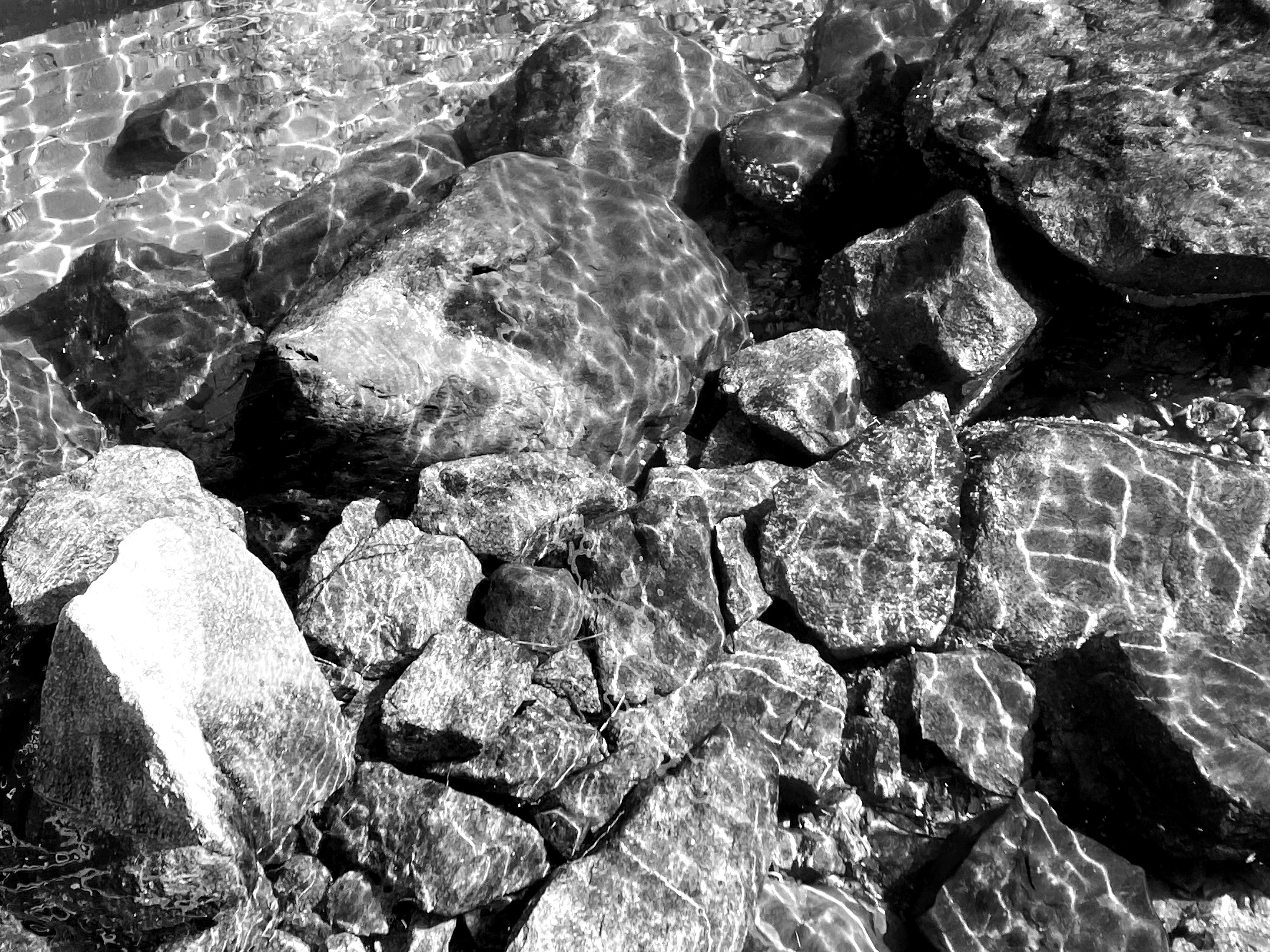
Before you begin to read this chapter, please go outside and find a largish stone, though not so big that it cannot be easily lifted and carried indoors. Bring it in, and immerse it in a pail of water or under a running tap.Then place it before you on your desk – perhaps on a tray or plate so as not to spoil your desktop.Take a good look at it. If you like, you can look at it again from time to time as you read the chapter. At the end, I shall refer to what you may have observed. - Tim Ingold, Materials Against Materiality
I’ve been thinking a lot lately about how to orient myself. How to write at all when heartbreak and violence feel ongoing and close, when the news keeps arriving faster than I can take it in. A syllabus didn’t feel right this month. Instead, I wanted to share a few things that have helped me pause, steady myself, and re-orient, even briefly.
In moments like this, I find myself paying closer attention to language. This month I felt unexpectedly steadied hearing Prime Minister Mark Carney speak about values-based realism. I’ve been suspicious of his support of pipelines and AI tools for healthcare and government services but clear language matters, especially now. I was grateful to hear Avi Lewis remind us that leadership must remain accountable. These moments didn’t fix anything, but they helped me feel a little less unmoored.
We’ve all been facing so much loss as well. Catherine O’Hara, an icon many of us grew up with, passed this week. Her humour was generous and kind, never cruel. And newsletters from artists across the world keep landing in my inbox, full of grief, anger, care, and resolve. Together, these losses remind me that artists help us reflect the world as it is, but also help us feel, laugh, and find our way forward together.
All of this has been folding into how I’m thinking about the future. Or maybe more accurately, about how to live without a clear sense of what comes next. I keep returning to the idea that part of whatever comes next will involve learning how to live with disorder. This is deeply uncomfortable for my very literal, very orderly brain. When I feel stuck there, I turn again to the writing of Édouard Glissant.
I’ve written before about his ideas of opacity and archipelagic thinking. This way of thinking resists rigid systems and clean continuity. Instead of wanting everything unified and resolved, Glissant offers the archipelago. A scattering of islands, connected by currents rather than land bridges. Hesitant, relational, intuitive. Full of gaps and pauses.
For Glissant, continuity does not come from smoothing over the past or forgetting what has happened. It comes from relation, what he calls Creolization. Identity shaped through rupture, not in spite of it.
“To be, I would now say, is not to be in place but to be along paths. The path, and not the place, is the primary condition of being, or rather of becoming.”
― Tim Ingold, Being Alive: Essays on Movement, Knowledge and Description
I often turn to Tim Ingold when I’m trying to orient. Like Glissant and poet John Keats, he’s comfortable staying with questions. I find that reassuring. There are no answers here, just the ongoing practice of turning toward uncertainty and noticing what holds.
No radiant futures. Just paths, stones, discontinuities, and the slow work of learning how to stand among them.
Stoniness, then, is not in the stone’s ‘nature’, in its materiality. Nor is it merely in the mind of the observer or practitioner. Rather, it emerges through the stone’s involvement in its total surroundings – including you, the observer – and from the manifold ways in which it is engaged in the currents of the lifeworld. The properties of materials, in short, are not attributes but histories.- Tim Ingold, Materials Against Materiality
All of this thinking about disorder, continuity, and living within questions is very much present in unravel, an exhibition I’m part of right now, alongside Tatjana Mirkov-Popovicki and Carlyn Yandle.
unravel
Tatjana Mirkov-Popovicki · Amanda Wood · Carlyn Yandle
February 3 – March 14, 2026 Seymour Art Gallery, Deep Cove
unravel includes repetition, installation, and familiar materials that are pushed, disrupted, or undone: painting, weaving, printmaking, sewing. Processes that usually promise order begin to slip, fracture, or diverge. The work moves back and forth between structure and disorder, asking what happens when expectations around materials and making no longer hold.
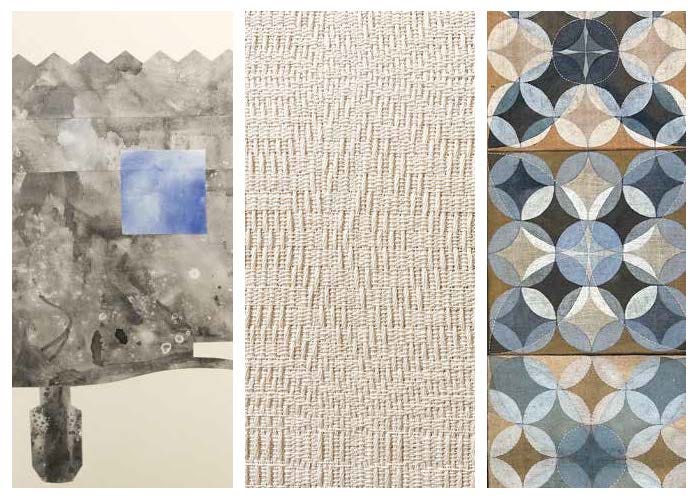
Tatjana’s work speaks to cultural heterogeneity and the gestures of uprooting, folding up an old life, crossing borders, and rebuilding in unfamiliar places.
Carlyn’s practice asks what it means to make by hand in a world saturated with objects and images, and how making can still function as a form of connection across fear, difference, and isolation.
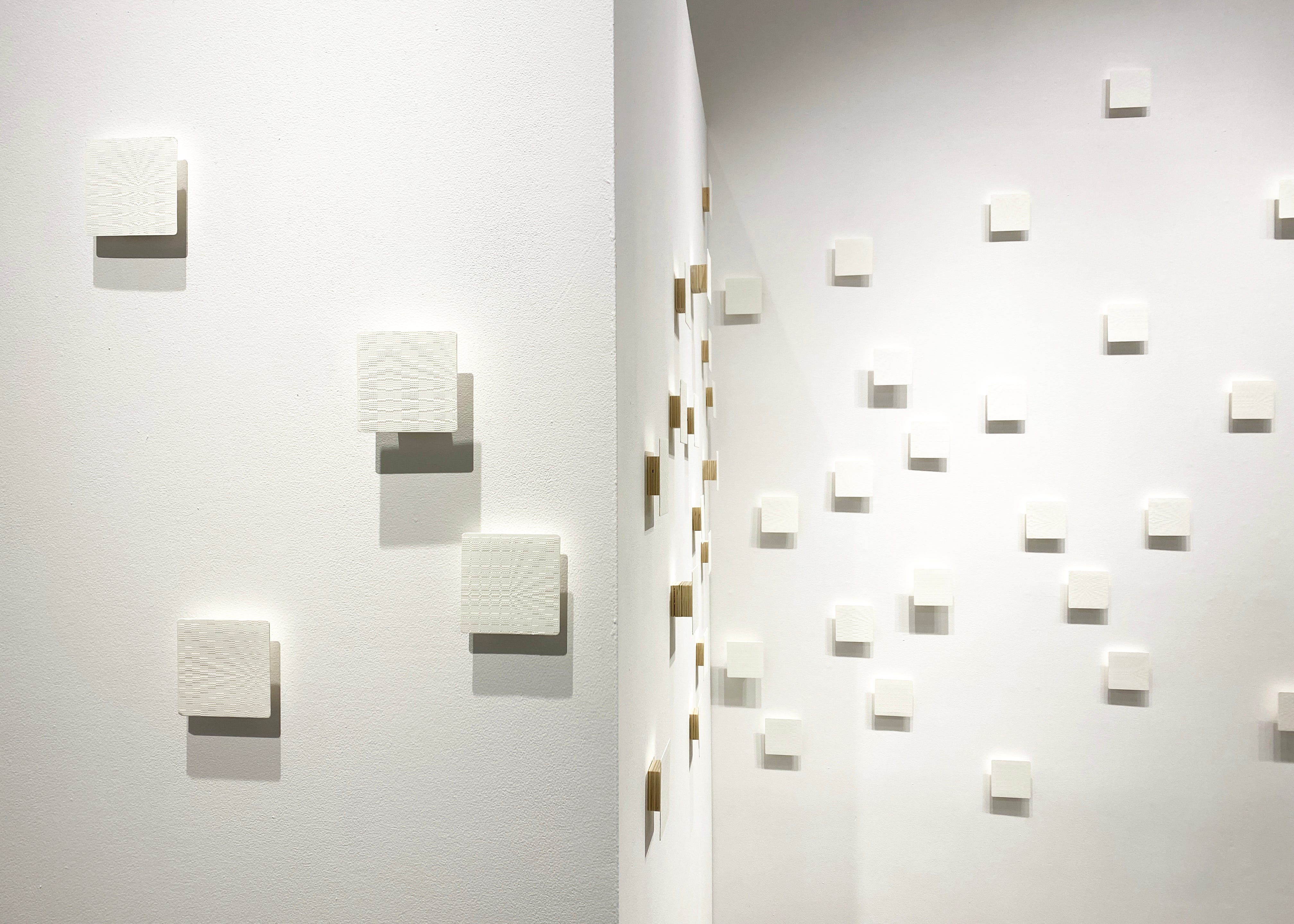
My own work begins with repetition and pattern, structures that at first appear orderly, but with time reveal tension, rupture, and instability. Thresholds and edge-places, where systems feel fragile and ornament becomes a way of exposing that fragility rather than smoothing it over.
There are several ways to spend time with the work and with us over the course of the exhibition:
Exhibition Reception: Sunday, February 8, 2–4 pm
From Conversation to Practice, with me: Sunday, February 22 at 2 pm
HEARTH Sewing Workshop, with Carlyn Yandle: Sunday, March 1 at 2 pm
Artist Talk, with Tatjana Mirkov-Popovicki: Sunday, March 8 at 11 am
If you’ve been thinking about paths rather than destinations, about how things come apart and are held together again, this exhibition might meet you where you are.
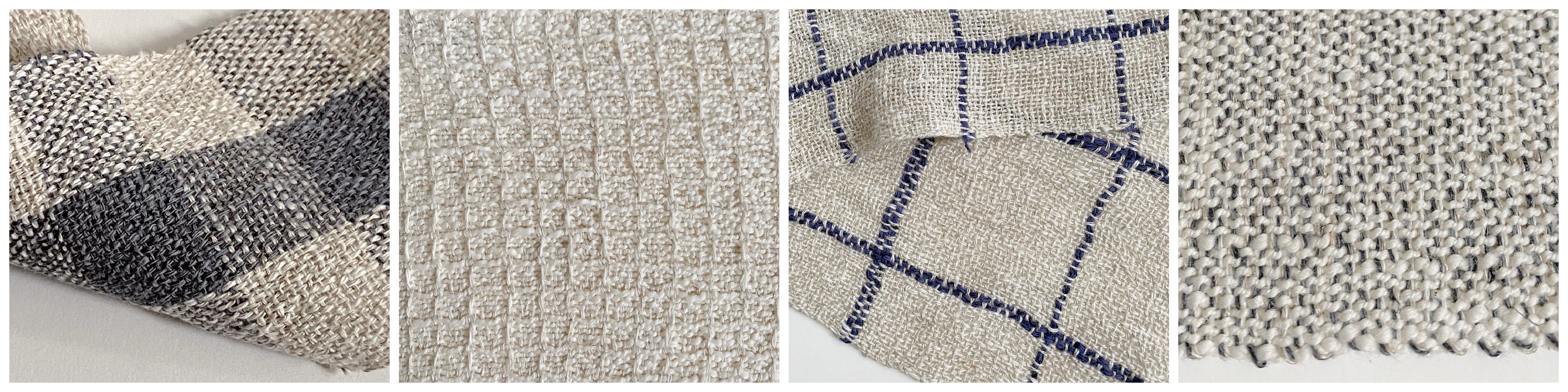
If spending time with the work makes you want to move your hands as well, I’ll be hosting a one-day spring weaving workshop a little later this season. More details soon. If you’d like to be the first to know, you can sign up for my workshop waitlist. It’s the easiest way to stay in the loop.
Tools for orienting:
The frontlines of protests in Minnesota. Interview with adrienne maree brown and Autumn Brown on CBC with so many practical tools to orient towards humanity through building community rather than shouting into the void. Murmuration in practice.
David Byrne Radio on Mixcloud offering some new sounds.
Who doesn’t need a kiss at the end of the rainbow? My favourite Catherine O’Hara film and some highlights from SCTV.
Odd Bunch. If you’re in Canada you can save money on groceries by getting weekly “less than perfect” produce delivery. We’ve been doing it for a couple of weeks now and I’ve been having so much fun playing with new recipes based on what we get.
Orienting through art books. I recently got a community library card from Emily Carr University of Art and Design. I was able to borrow Contact: Art and the Pull of the Print and a Phyllida Barlow exhibition catalogue. Seek out alternative libraries!
Moonbeaming podcast orienting through the Magician tarot card.
until soon,
Amanda
a good read, to be along the path, makes perfect sense, not to be in the place, thank you, you didn't mention where your exhibit will be held and I can't find it online.