
wayfinding for relation without resolution
an archipelago of unstable patterns

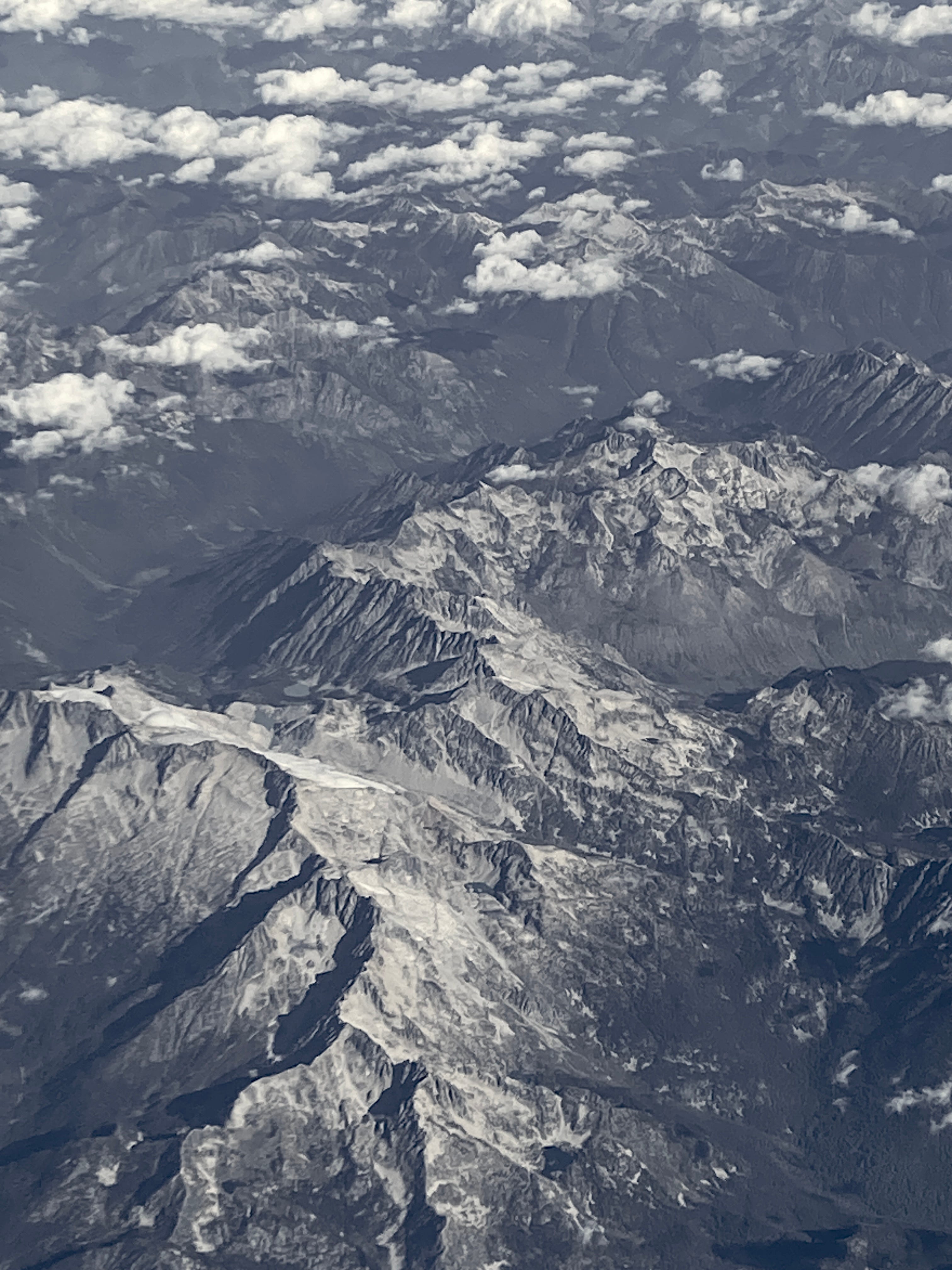
Hello from Windsor!
A meandering dispatch this month, exploring how we can really relate or connect without cohesion or fusing into something else. A way to make space for the things that seem disconnected but form some kind of meaning by the simple fact that they are happening and being noticed at the same time — an archipelago.
I flew to the East Coast a few days ago to prepare for my exhibition at Artcite Inc. which is opening on Friday. I wanted to spend a few days in Toronto in a mini-residency to adjust to the time change, gather thoughts, and see art before heading to Windsor to install the work.
Residencies always come with surprises. Even self directed ones. This time, it was a jumble of disconnected but repeating ideas that caught my attention: pattern as wayfinding, how artists use process, relation without cohesion. Rather than try to connect the dots, let’s see what happens when there is a little less plot. What if these ideas are individual islands, adjacent to each other, connected by location but maybe not theme or content.
UNIFORM: This is an unseasonably hot island. Very dry and humid. I’m finding myself wearing the same four items of clothing in an attempt to stay cool. I packed for Vancouver weather, so many socks and a raincoat. This limitation has drawn me to the efficiency of a uniform — the exact thing that is needed and nothing more to carry around. And laundry detergent strips which I thankfully packed!
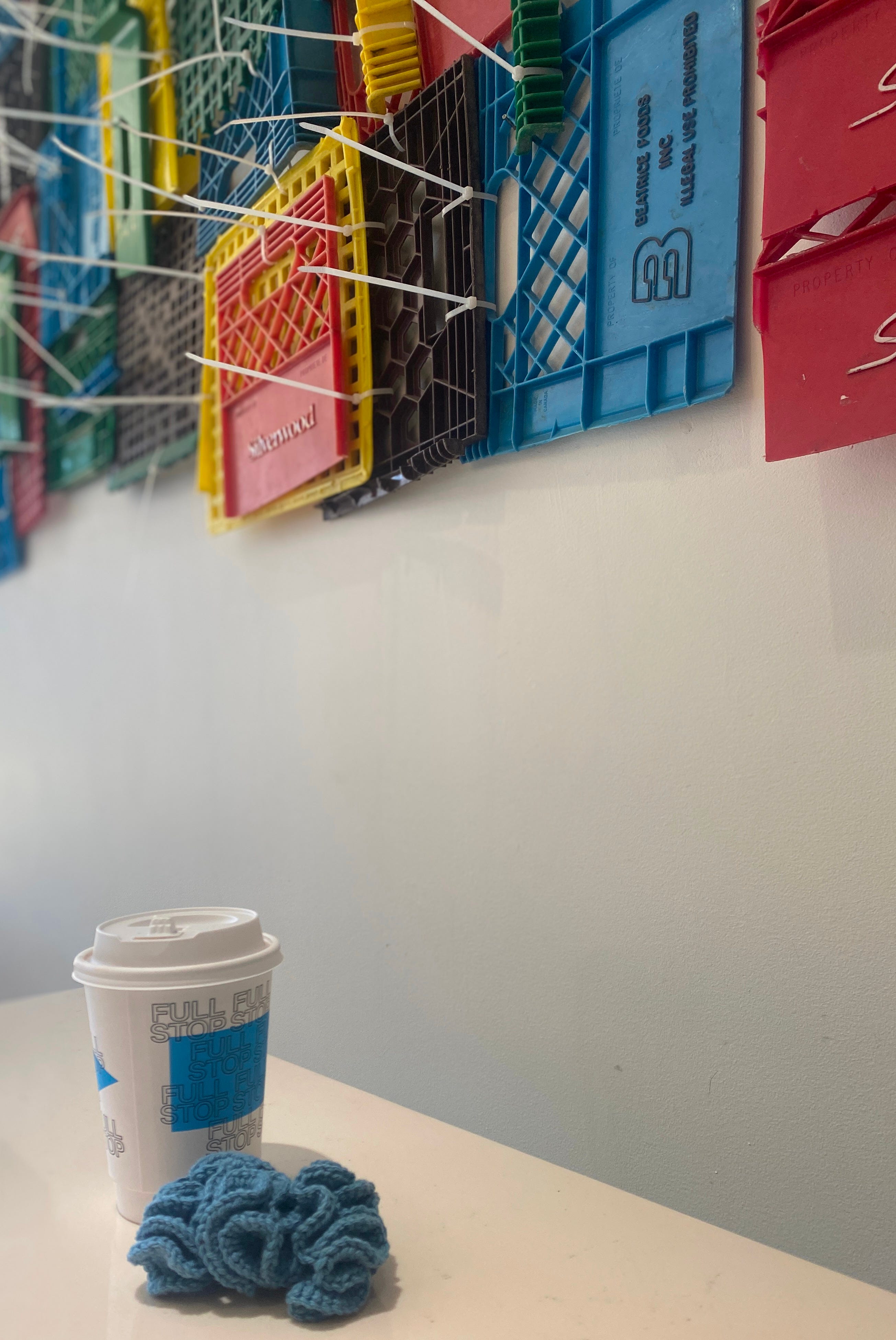
SENSE : Sense island hits all the senses at once — sharp industrial noise and almost LA-like dry, hot, wide, empty streets, dark underpasses, the smell of the Prague sewer (in a good way), a well stocked art supply store, and strong coffee.
In Toronto I stayed in a neighbourhood that I’ve never been to before. It started out quite challenging sensory wise but after a few days I’m settling in. I’ve seen some amazing art and I got to meet an online friend I met in a pandemic-era critique group.
“Do my movement and my thinking have an intimate connection? First of all, I don’t think my body doesn’t think.”
Trisha Brown
LOCUS: This island has an oyster bed. If I imagine these things I’m noticing like the sand being gathered by an oyster trying to make a pearl, at the centre is Trisha Brown. She was a choreographer and one of the founders of the post-modern dance movement in the sixties. Think John Cage, Fluxus or Sol Lewitt but for movement. A few weeks ago I had never heard of her but she keeps coming up in different ways.
Trisha Brown used carefully constructed rules to create dances that allow for dancers and non-dancers to participate. Essentially creating a human based algorithm. She came into my field of view through a workshop I did a few weeks ago with Kate Sicchio that explored Trisha Brown’s Locus as part of the Alpaca Conference on Patterns.
I was so surprised to find more Trisha Brown in Toronto in the form of an absolutely engaging exhibition by Marla Hlady at Christie Contemporary. She uses Locus and other movement patterns by Trisha Brown as the starting point for a stunning installation incorporating field recording, pulleys, tape loop machines, and bags of water. I would go back again if I had more time.
SYLLABUS: This island seems orderly on the surface but the more time you spend here, the more it becomes something else. Things are repeating, forming patterns, and I’m learning to make shapes and explore without knowing why or what is going to happen. Maybe this is the beginning of another syllabus using uniforms, sensory data sets, and human algorithms.
SIDE QUEST: On this island, you follow the cicadas, the things discarded and the snippets of conversations people don’t think you are listening to. There are street cars and subways here, but they turn so often it’s hard to get a sense of where they are taking you or what the underlying structure is.



Some things that fit or do not fit within this imaginary archipelago. Maybe they are more islands in themselves.
The Richest Man in Babylon, Thievery Corporation. I saw them perform at the Malkin Bowl before I headed out of town. I forgot how incredibly well this experiment of ever changing singers within the context of dub, jazz, dance music, rap, reggae, and sitar works together without losing their original intention. These sounds are not alongside but responsive as they build something together.
On the Calculation of Volume Book I by Solvej Balle. I don’t know how to describe this. I’ve just begun and while I don’t know what’s happening, I’m curious to see where this goes. Here are the publisher’s notes:
“The first volume’s gravitational pull—a force inverse to its constriction—has the effect of a strong tranquilizer, but a drug under which your powers of observation only grow sharper and more acute. Give in to the book’s logic (the thrilling shifts, the minute movements, the slant wit, the slowing of time), and its spell is utterly intoxicating.”
Connected to the Balle book is this sticker I picked up at Type Books along with some interesting looking chapbooks.
I started Somebody, Somewhere a few weeks ago and I just finished season three. I want more of this. So charming, important and real. It speaks to so much of this idea of relating without cohesion or resolution, of making your way through life feeling just outside of it all and not really knowing how it all works. Plot-less fiction. Hanging stories. Gloria’s namesake.
Back home, things are happening!
SSNAP has launched. Please consider voting for my piece Generative (In)tension for the People’s Choice Award. Tell your friends! If you appreciate my work this is a free and tangible way to show your support. I’d be so grateful. Join me on October 9 on Salt Spring for a panel discussion with other artists who work with textile processes.
In Vancouver you can see Generative (In)tension II at Enabling Arts in a group show, The People United. I will be saying a few words at the closing event on October 10. I’d love to see you there!
Coming soon…
October 3 - November 8 | Radiant Fractures | My upcoming solo exhibition at Artcite Inc. explores how invisible patterns can break apart and spread in unexpected ways. The opening reception is on Friday, October 3 from 7-10pm with an artist tour on Saturday, October 4 from 12-1pm.
November 5 | Introduction to the Stitched Pamphlet | a one day workshop exploring stitched methods for making sketchbooks at Malaspina Printmakers Society.
November 20-23 | Eastside Culture Crawl | I’ll be opening up my studio and pulling work from the archive again this year. Come say hello during this amazing four day event!
December 2-16 | Introduction to Cyanotype | Over three weeks we’ll use a classic cyanotype recipe to create imagery with physical resists and digital negatives and you’ll get to try out some different modifiers. You’ll leave with an understanding of this fascinating alternative photography process, a handful of studies, one larger piece and the ability to develop your own cyanotype practice at home.
until soon,
Amanda